The International Society of Arboriculture estimates that falling trees and limbs cause 25 deaths and hundreds of property damage claims each year in the U.S. – and dense urban areas, such as New York City, experience disproportionately more simply because trees are closer to property, sidewalks and roadways. The bad news is that most hazardous trees provide warning signs long before they collapse. The issue is that the majority of homeowners are unaware of what those signs are. A tree can appear perfectly healthy from the street while harboring internal decay, root damage, or structural weakness that’s been building for years. The key to catching a hazard early, versus an emergency after a limb falls on a car, roof, or person, is knowing what to look for.
1. A Sudden or Increasing Lean
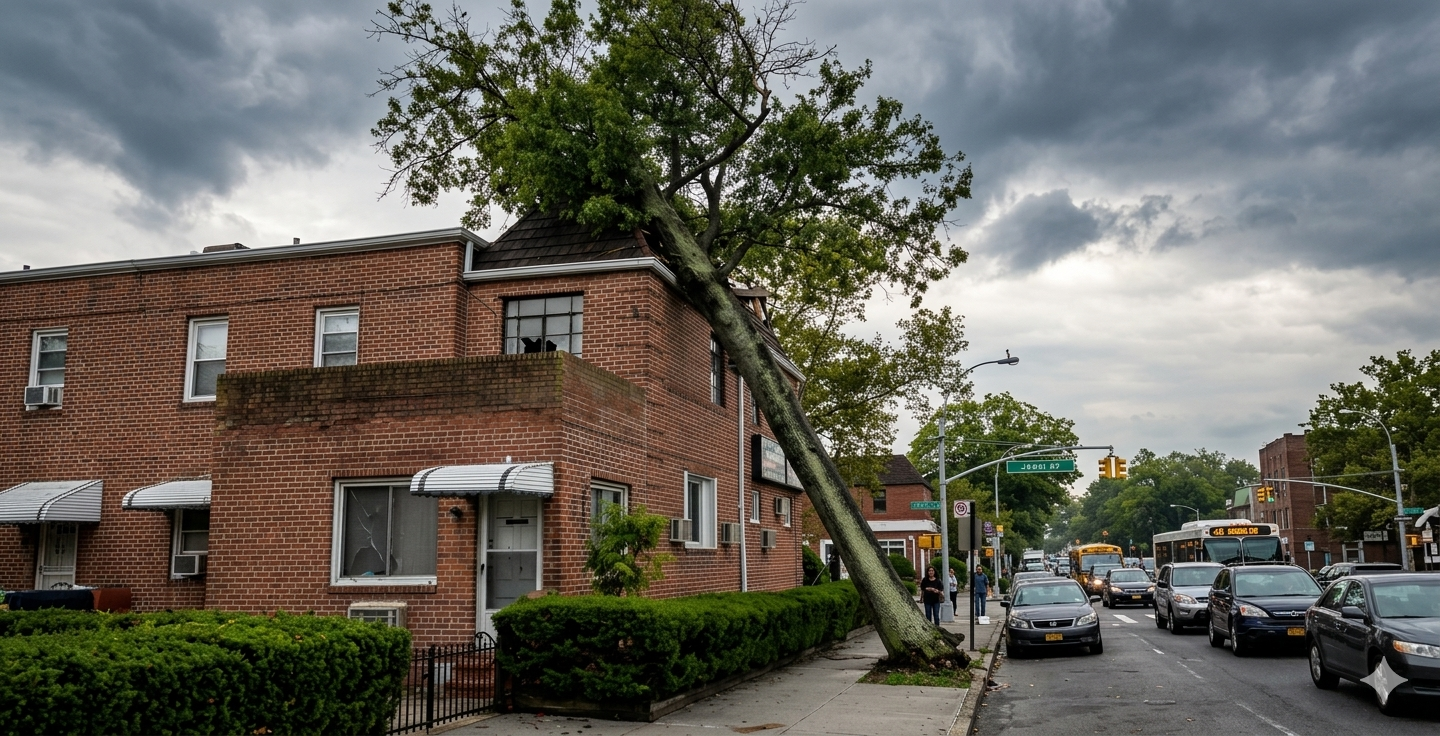
All trees follow a natural growth pattern and some trees have a slight lean over decades that is entirely secure. A concern is a sudden lean, or a lean that develops over a short period of time, particularly after a storm or after heavy rain. This kind of lean can mean that the root system is making a turn or that it is failing to grow, and should not be watched over a period of time. If the tree tips over a bit every season, it’s saying that the anchors are losing the battle with gravity.
2. Cracks or Splits in the Trunk
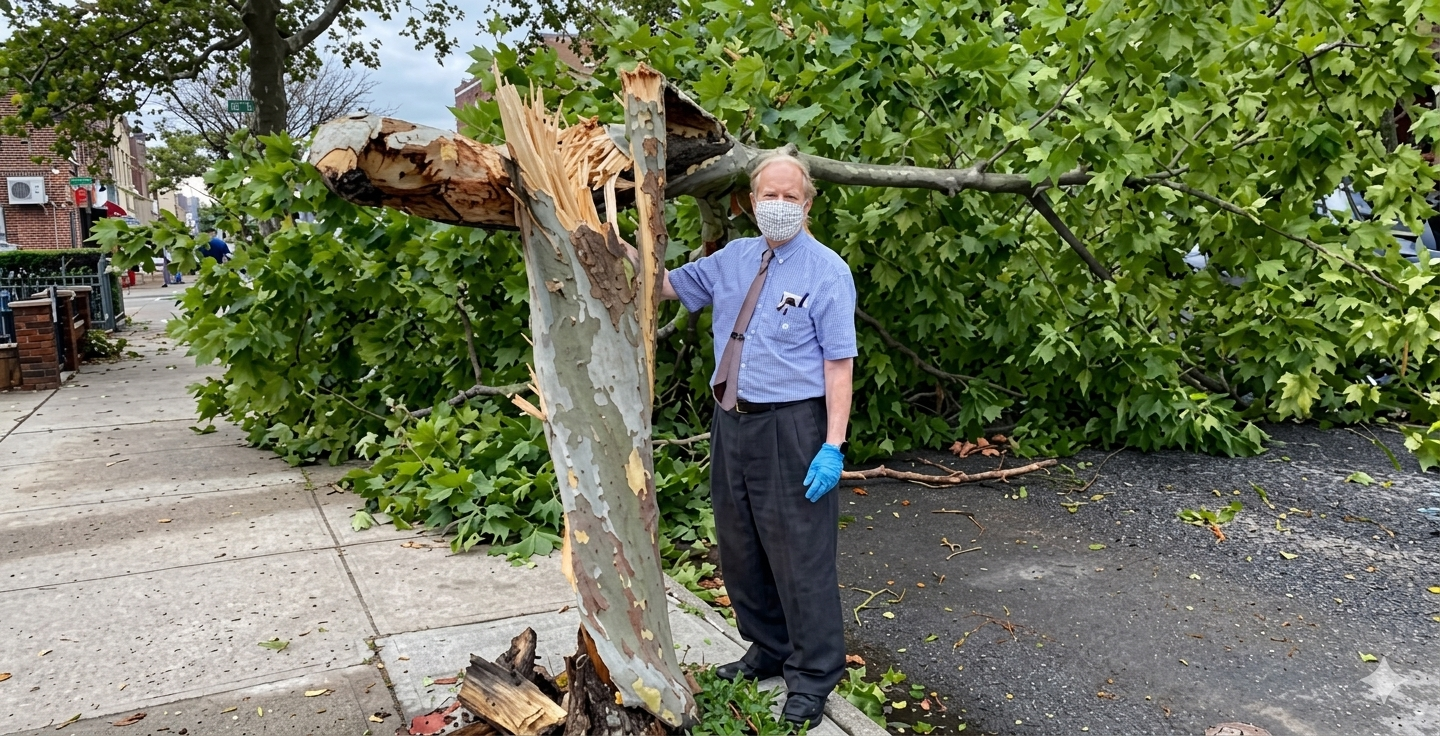
Vertical trunk cracks are one of the most obvious signs of risk of structural failure. They may go deep into the wood and are indicative of a loss of the tree’s vitality, either as a result of stress in the storm or as the result of decay starting from the center and moving outward as the tree ages. A vertical crack along the trunk or a crack that is widening after a wind event indicates that the tree may split completely the next time it is under a heavy load.
3. Dead or Hanging Branches
When branches die, they’re often referred to as widow-makers, and indeed, they are. These limbs can drop suddenly even on a quiet day as the tissue that attaches the limb to the tree has already been killed. Trees with lots of deadwood in the upper canopy are more likely to break with additional storms as dead wood does not bend as readily as living wood.
4. Fungal Growth at the Base or Trunk
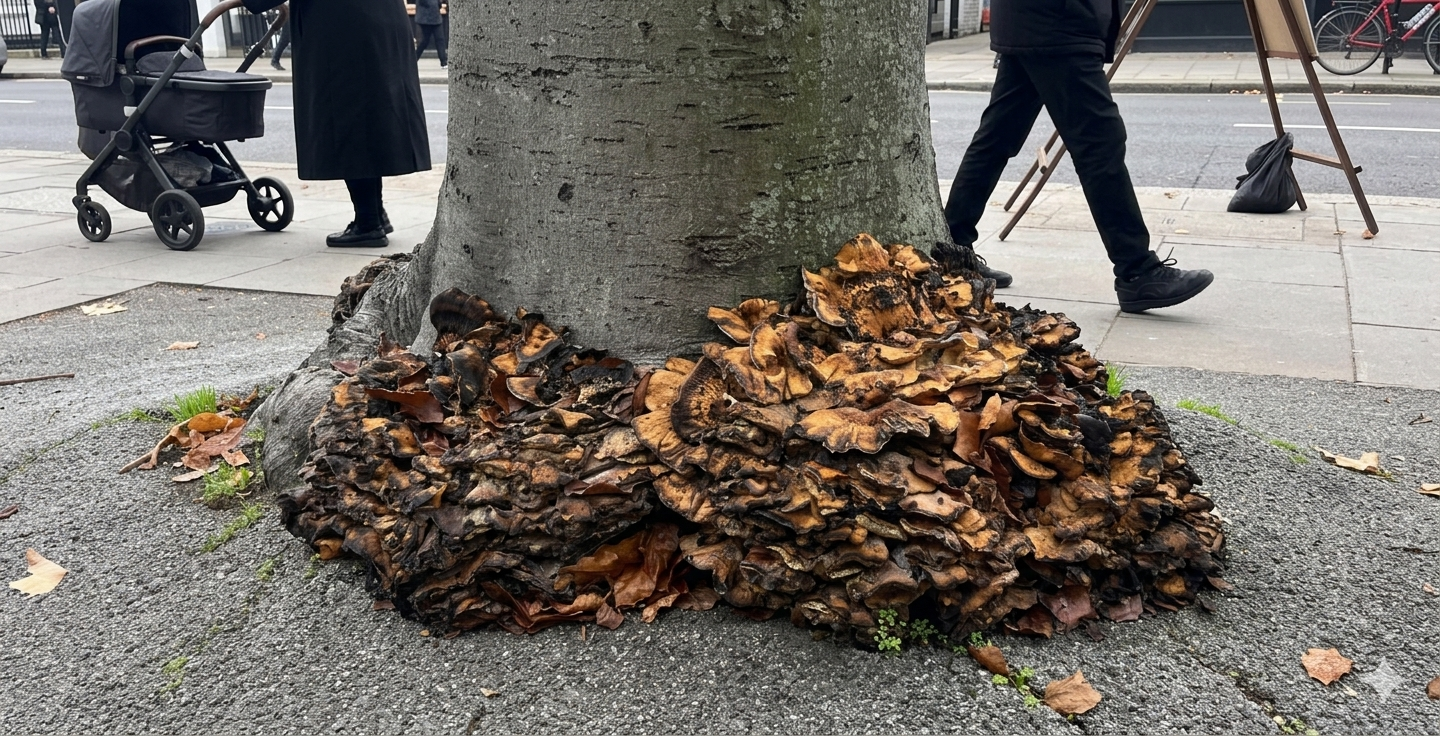
Growth of mushrooms or fungal conks on or around trees is usually an indicator of trouble. The fruiting bodies are the result of internal decay processes that have been going on for several years under the bark, on which they become visible. The wood-decay fungi that cause conks have usually already decayed a large amount of the tree’s structural wood when conks are present, and the fungi typically focus on the lower trunk or root system of the tree.
5. Hollow Sections or Cavities
If a tree has a hollow trunk, it’s not necessarily a sign that it must be removed, but it does indicate that a considerable amount of structural wood has been lost in the tree. What really matters is what percentage of the cross section of the trunk is solid. A trained arborist can evaluate cavities to see if enough wood shell remains to hold the load of the tree and canopy or if the hollowing stem is advanced to an unsafe stage.
6. Soil Heaving or Cracking Near the Base
One of the most overlooked warning signs is happening at ground level rather than up in the canopy. When the root plate moves, it causes the soil to rise up, forming a mound, crack or lifted area of ground near the root flare. This is often one of the first symptoms that a tree is about to fail to stay upright and it is often the first symptom seen above ground before a lean occurs.
7. Included Bark at Branch Unions
At the point where two major limbs connect to the trunk, bark will sometimes grow in between the limbs instead of the strong, rounded connection. This is known as included bark and forms a weak structural union between the limbs as they do not join properly. Such unions can completely fail under wind load or under snow and ice load and often without any prior warning.
8. Thinning, Discolored, or Undersized Canopy
A healthy tree’s canopy should be full and of the correct size for the species and age of the tree. If you notice a canopy beginning to thin out prematurely, or leaves are smaller than usual, yellowed or dropping off the tree early in the season, it is most likely that the tree is having internal issues due to root injury, disease or vascular system deterioration. A canopy in decline is also a good sign that overall tree vigor is also declining, and that the tree will not be able to resist stresses from wind and weather in the future.
9. Proximity to Structures Combined with Any of the Above
It’s one thing when a tree has one or two minor warning signs and is located on an open field, and another when the tree is located six feet from a Bronx brownstone or directly overhead a driveway. The proximity to risk is a factor that is multiplied, not an individual factor. NYC’s high density residential development places many trees in close proximity to homes, cars, and walkways and a moderate structural problem will have a disproportionate impact if the tree fails. That’s why professional arborists need to consider the site as much as they consider the tree itself in their removal decision.
Why Early Detection Matters More in NYC
The warning signs are also more prevalent and more significant in New York City, because the city’s urban forest is under increasing threats. City trees are exposed to road salt and pollution, compacted soil, and limited root space from sidewalks and foundations, which all make them more susceptible to the type of decline that creates these warning signs. Meanwhile, the built-up environment surrounding most trees in the NYC area makes it difficult to find a “safe” way for a tree to fall when it is compromised. It’s not a safety risk in a rural landscape, but in a setting where a low-risk tree grows between a sidewalk, a parked car and a living room window, it becomes a liability.
This is why it is not a good idea to wait until a tree is obviously dangerous. The majority of the nine signs listed above are progressive and by the time they can be seen by an untrained eye, there was probably a long history of the problem. Recognizing the signs early in the season will give homeowners many choices – including careful pruning to improve the union, cabling and bracing to support a weak union, and an eventual removal on their own schedule instead of an emergency schedule.
Conclusion
If you’ve noticed any of these nine signs on a tree near your property, the safest next step is a professional structural assessment rather than a guess from the ground. Trained arborists employ tools and diagnostic techniques that are much more than a visual assessment and include sounding for internal decay and root collar excavation for below ground stability. These evaluations will indicate if a tree must be removed now, if corrective pruning will help, or if it is to be watched in the future.
If your tree exhibits any of these symptoms, Bronx residents should not wait until the next storm to take action. That’s what NYC Tree Trimming Removal Corp knows how to do and that’s what we can help you see so you can know what you’re dealing with and what the safest course of action is: either saving the tree or removal prior to it being a true hazard.